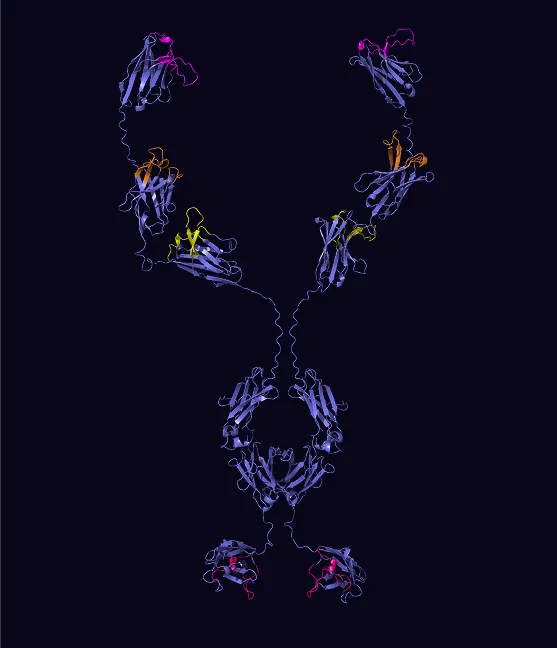
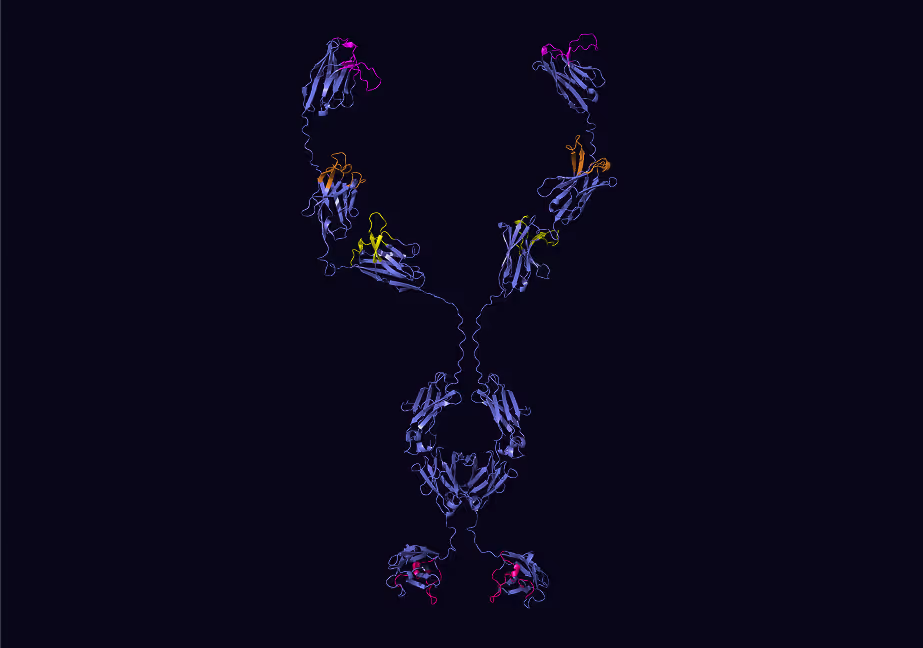
The cancer biologic industry has relied on 50-year-old IgG antibody technology.
Synthetic Design Lab is a next-generation antibody-drug conjugate (ADC) company building the future of biologics on new foundations, with a focus on bringing new therapies to those affected by difficult-to-treat cancers.


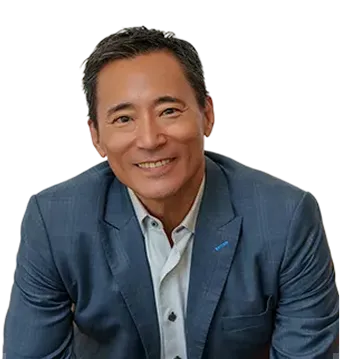
A pioneer in the field of cancer immunotherapy and protein engineering and co-author of the Cancer Immunity Cycle, Dr. Chen is an experienced physician-scientist, key opinion leader, drug developer, and entrepreneur.
Prior to founding Synthetic Design Lab, Dr. Chen spent over a decade at Genentech, as Vice President and Global Head of Cancer Immunotherapy Development, where he focused on development of immune modulatory, anti-angiogenic, and ADCs as targeted therapies and their accompanying diagnostic tools. This included leading clinical development for atezolizumab (TECENTRIQ), the first approved PD-L1 inhibitor, from pre-IND to clinical trials and commercialization.
Dr. Chen then joined IGM Biosciences as Chief Medical Officer, developing novel engineered multivalent and multispecific therapeutics and overseeing the company’s growth from a small 25-person team to one of the most successful IPOs of 2019. He is also a founding partner of Genesis BioCapital and founder of Bionic Medicines.
Dr. Chen received a B.S. in Biology from the Massachusetts Institute of Technology, his M.D. and Ph.D. in Microbiology and Immunology from the University of Southern California, and conducted his residency, oncology fellowship, and postdoctoral work at Stanford University. He also serves the Society for Immunotherapy of Cancer (SITC) as Immuno-Engineering Co-Chair, previously completed his term on the Board of Directors, and is on the Board of the Protein & Antibody Engineering Summit (PEGS BOSTON 2025).
Daniel S. Chen, M.D. Ph.D.
Chief Executive Officer

Dr. Baliga brings over 25 years of experience in the biotechnology industry leading the development of novel engineered therapeutic platforms, AI-driven antibody design, and ADC technologies.
Before co-founding Synthetic Design Lab, Dr. Baliga served as Vice President of Biotherapeutics at Exelixis, where he built a team to discover mAbs, bispecifics, and ADCs, including XB064, XB628, XB033 currently in the development pipeline. Prior to Exelixis, Dr. Baliga was Chief Scientific Officer at RubrYc Therapeutics, where he developed a novel platform for mammalian display-based discovery of epitope-steered antibodies targeted to AI-generated epitope mimetics.
Before RubrYc, Dr. Baliga was Vice President of Discovery Biology at IGM Biosciences, where he developed the platform technology for making novel glyco-engineered mono- and multispecific IgM antibodies. Prior to IGM, Dr. Baliga built a platform for site-specific conjugation of ADCs with single or multiple warheads at Sutro Biopharma. Dr. Baliga holds more than 30 patents, encompassing platform technologies, monoclonal antibodies, bispecifics and antibody drug conjugates.
Dr. Baliga received his M.Sc. in Chemistry from the Indian Institute of Technology, his Ph.D. in Bio Organic Chemistry from Caltech, and conducted his postdoctoral work at Yale University.
Ramesh Baliga, Ph.D.
Chief Scientific Officer

Dr. Mallet is a recognized leader in the field of antibody drug conjugates (ADCs) with over 25 years of creating and advancing medicines and leading drug development teams. He led the development of the first site-specific ADC, advanced novel payload and biologics platforms, including immune-stimulating conjugates, cytokine fusions, and conditionally activated T cell engagers. His work has been shared through numerous publications, book chapters, review articles and invited presentations at international conferences.
His career spans leadership roles in Research and Pharmacology at Genentech/Roche, Novartis, and Gilead, as well as early-stage companies including Genesoft, Maverick Therapeutics, and Bolt Biotherapeutics.
Dr. Mallet received his S.B. in Chemistry from the Massachusetts Institute of Technology and Ph.D. in Pharmaceutical Chemistry from the University of California, San Francisco. He completed a Postdoctoral Fellowship at Weill Medical College of Cornell University.
Bill Mallet, Ph.D.
Vice President, Pharmacology and ADC Biology